











Iron Oxide Pigment Grades: 5 Best Checks Before You Order
Iron oxide pigments are the workhorse of inorganic colour. They are lightfast, alkali resistant, chemically stable and inexpensive, which is why the same chemistry appears in concrete pavers, coil coatings, masterbatch and printing ink.
But “iron oxide pigment” is not one product. Two grades carrying the same colour index name can differ in tinting strength by twenty percent, behave completely differently above 180 °C, and sit on either side of a heavy-metal limit. The grade that performs in a roof tile will fail in a polyethylene masterbatch.
This guide covers how iron oxide pigment grades divide, which property decides each application, and the five checks worth making before the first order.
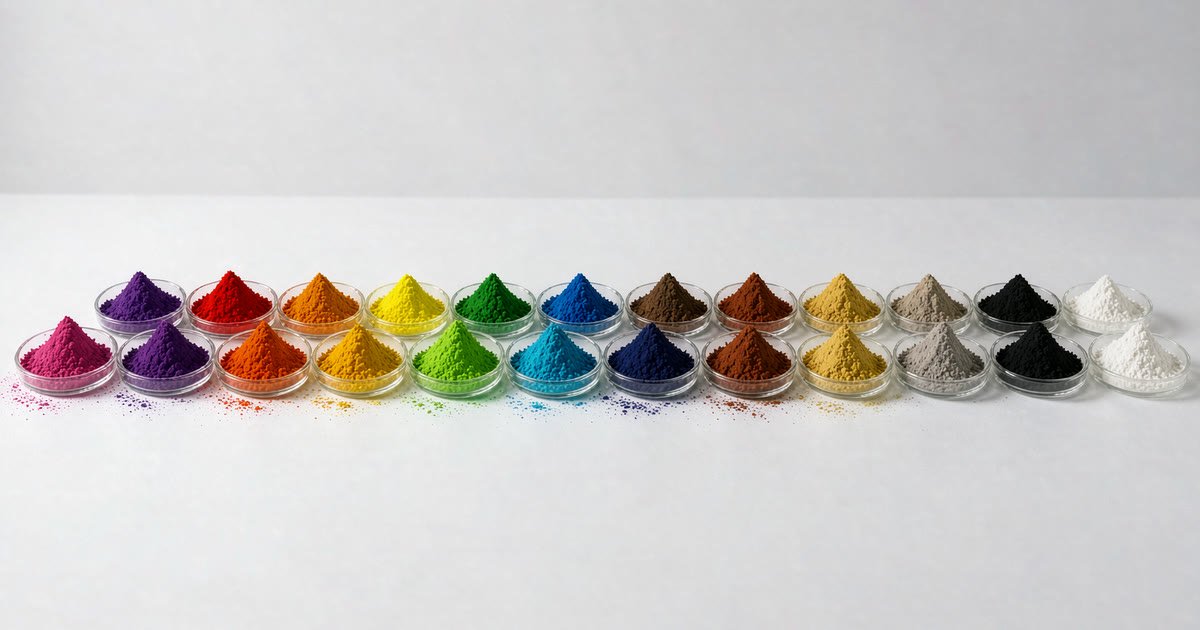
Iron oxide colour range — the same chemistry produces yellow, red, brown and black depending on oxide phase and particle size.
What Iron Oxide Pigments Are
The family covers four oxide phases. Hematite (Fe2영형3) gives red, goethite (FeO(OH)) gives yellow, magnetite (Fe3영형4) gives black, and brown is generally a controlled blend. Each phase has its own colour index name, which is the reference you should be quoting to a supplier:
- C.I. Pigment Red 101 — synthetic red iron oxide
- C.I. Pigment Yellow 42 — synthetic yellow iron oxide
- C.I. Pigment Black 11 — synthetic black iron oxide
- C.I. Pigment Brown 6 — brown iron oxide
- C.I. Pigment Red 102 — natural red iron oxide
What they have in common matters as much as the colour. They are insoluble in water and in most solvents, unaffected by ultraviolet light, resistant to alkali, and stable well beyond the service temperature of any coating or polymer they are used in. Red and black grades tolerate firing temperatures that would destroy an organic pigment.
Six Colours, Six Jobs
The colour range looks interchangeable. It is not, and the differences show up in processing rather than in the shade card.
| 색상 | Main uses | Point to watch |
|---|---|---|
| Red (PR 101) | Concrete, roof tiles, architectural and protective coatings, plastics | Precipitation and calcination routes give different undertones at the same colour index |
| Yellow (PY 42) | Concrete, architectural coatings, plastics | Dehydrates to red above roughly 180 °C — the single most common cause of a failed batch |
| Black (PB 11) | Concrete, coatings, plastics, toner | Magnetic and non-magnetic grades are separate specifications, not a price tier |
| Brown (PB 6) | Earth tones, masonry, camouflage, wood finishes | Usually a blend — ask for the ratio, because it decides how the shade shifts on weathering |
| Orange | Terracotta, roof tiles, decorative concrete | Blended from red and yellow, so batch variation is the sum of two variables |
| Composite green | Decorative concrete, paving, renders | Yellow plus a blue component; the lightfastness of the blue sets the service life, not the iron oxide |
Synthetic vs Natural: Decide This First
Before grade, before price, decide the source. It is the choice that constrains everything downstream.
| Synthetic | Natural | |
|---|---|---|
| Source | Controlled precipitation or calcination from iron salts or recovered iron | Mined ochre, crushed and milled |
| 청정 | Specified and repeatable | Varies with deposit; silica and clay content moves between lots |
| Tinting strength | Higher and more consistent | Lower; needs a higher loading for the same depth |
| Shade | Bright, controllable, close to the standard | Earthier and slightly muted, but valued for exactly that |
| Best fit | Coatings, plastics, inks, colour-critical work | Masonry, blocks, bulk concrete where cost per tonne decides |
The mistake worth avoiding runs in both directions. Buying synthetic grade for a block yard that never colour-matches between pours is money thrown away. Buying natural grade for an exterior coating that will be compared against a control panel two years later is a warranty claim waiting to happen.
Iron Oxide Pigment Grades by Application
Each end use evaluates the same pigment family on a different property. Specifying the colour is not enough; the line that decides acceptance is usually buried in the technical data sheet.
| 애플리케이션 | Deciding property | What to specify |
|---|---|---|
| Architectural and protective coatings | Lightfastness, dispersion, tinting strength | Micronised synthetic red or yellow; state the fineness of grind you need |
| Plastics and masterbatch | Heat stability, moisture, dispersibility | Surface-treated yellow for high-temperature polymers; low-moisture black |
| Concrete, pavers, roof tiles | Alkali resistance, cost per coloured tonne | Synthetic or natural red and black; confirm the dosage limit for cement systems |
| Printing inks | Particle size, transparency | Micronised grades; residue on sieve matters more than the average figure |
| Rubber and elastomers | Vulcanisation temperature | Black and red; avoid yellow above the dehydration threshold |
| Ceramics and glazes | Purity and heavy-metal content | High-purity synthetic; request the metal report, not just the colour card |
One commercial point follows from all of this. Price per kilogram tells you very little, because a grade with higher tinting strength does the same job at a lower loading. What actually matters is cost per coloured tonne of finished product — and that number only exists once you know the loading the grade will let you run.
5 Checks Before You Order
1. Tinting strength against a standard. Not the figure on the data sheet — a comparison the supplier has actually run, with the result you can see. A ten percent shortfall is a ten percent increase in dosage, which quietly erases the price advantage you negotiated.
2. Residue on sieve. Average particle size is the number everyone quotes. Residue above the screen is what causes grit, streaks and filter blockage, and it is often missing from the sheet.
3. Moisture content. A pigment that cakes in the bag will not dose accurately. In dry-mix concrete it also competes with the water you planned for the mix.
4. Heat stability. Essential for yellow. If the grade will see more than roughly 180 °C in an extruder or a kiln, confirm the supplier has tested it at your processing temperature, not at a generic one.
5. Heavy metals and regulatory status. EN 71-3 for toys, REACH SVHC declaration for the EU, AP(89) where food contact applies, and a much tighter metal profile for cosmetic or pharmaceutical use. Ask for the report, not the claim.
Alongside the five, request a certificate of analysis tied to the actual production lot and a retained sample from the same lot. A COA that could belong to any batch is a template, not a record.

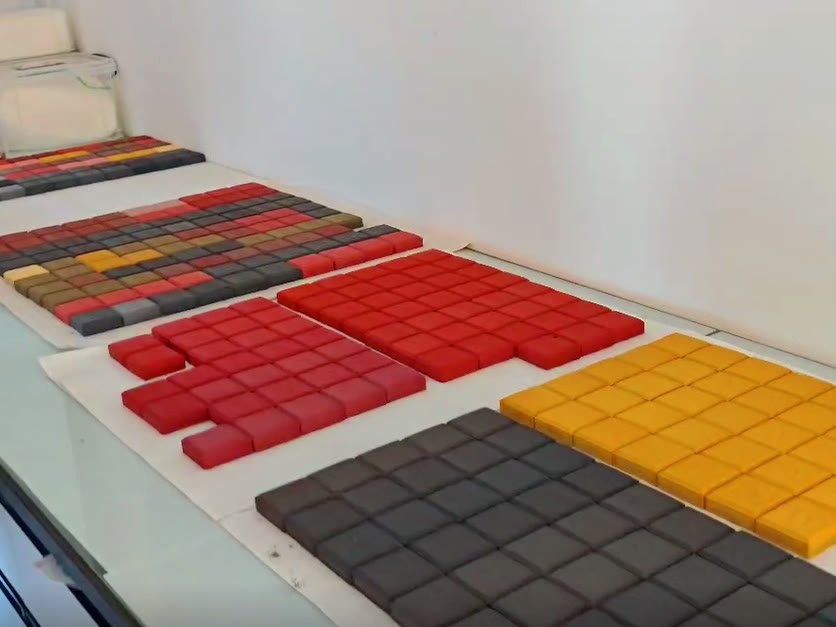
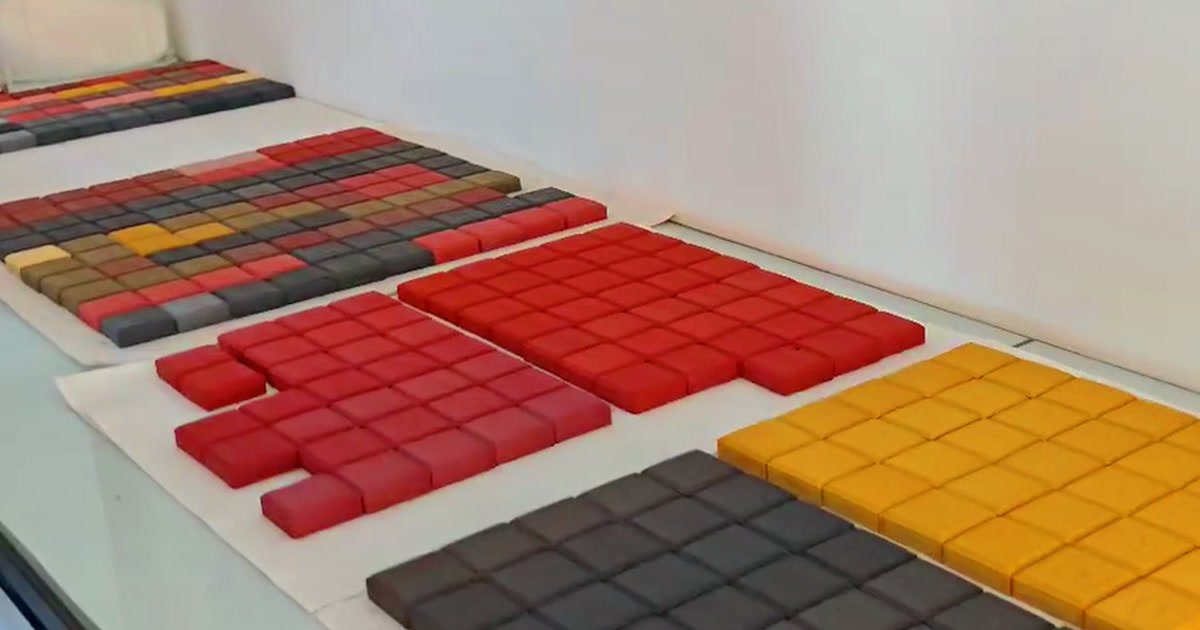
Batch testing — tinting strength, residue and moisture are checked against a retained standard, not against a previous shipment.
How We Verify an Iron Oxide Supplier
The checks above describe what to ask for. Putting them into practice means comparing physical evidence, and there are three places where a supplier’s answer tells you most of what you need to know.
Three lots, not one. A single sample proves nothing about consistency. Comparing three production lots against a common standard exposes shade drift that a polished sample would hide.
Documentation that traces back. The COA should tie to a production record — raw material, furnace or reactor conditions, laboratory result — and not stand alone as a one-page PDF that could belong to any batch.
A test in your own system, not theirs. A pigment that passes in the supplier’s lab can still fail in your binder, your extruder or your mix design. The only meaningful result is the one produced under your process conditions.
The iron oxide pigment grades we supply come from Zhejiang Huayuan New Material Co., Ltd. in Deqing, Zhejiang — the manufacturer behind the HYROX brand. The plant runs its own research and quality-control centre, and produces grades used in tobacco, electronics, pharmaceuticals, cosmetics, food and paper, where impurity and compliance limits sit several levels tighter than general industrial grade. That is the reason we place colour-critical orders there rather than treating iron oxide as a commodity filler.
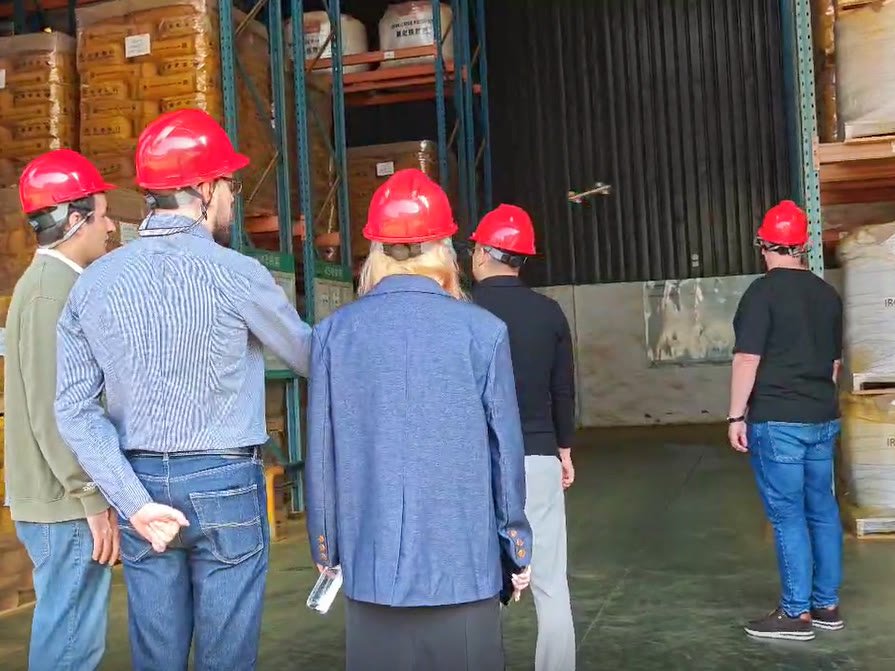
Finished goods — packaging, labelling and documents are checked at the same time as the pigment itself.
Frequently Asked Questions
Is iron oxide pigment the same as rust?
No. Rust is iron oxide formed uncontrolled, with variable hydration, particle size and contamination. A pigment is manufactured to a specified oxide phase, particle size distribution and purity, so that the colour can be reproduced batch after batch. The chemistry overlaps; the control does not.
Why does iron oxide yellow turn red when heated?
Yellow iron oxide is goethite, FeO(OH). Above roughly 180 °C it loses water of crystallisation and converts to hematite, Fe2영형3 — which is red. The change is irreversible, which is why yellow grades for plastics are surface treated or processed below that threshold.
Can one grade be used in both concrete and coatings?
Rarely. A concrete grade tolerates coarser particles and a wider impurity profile, because it is dispersed in a dry mix and viewed at a distance. A coating grade needs fine dispersion, low residue and a tight metal profile. Using the cheaper grade in a coating shows up as grit and shade variation.
How should iron oxide pigment be stored?
Dry, sealed, off the floor and away from acids. Unopened bags typically hold their specification for two to three years. Moisture is the main enemy: it causes caking, dosing errors and, in yellow grades, a slow shift in shade.
Choosing Iron Oxide Pigment Grades for a Specific System
Most grade problems are settled before the first shipment, by matching the pigment to the process rather than to the shade card. If you are comparing options for a particular coating, polymer or cement system, tell us the application, the target shade and the loading you have in mind — we will come back with the grade, a sample from a current lot and the documents that go with it.
WPAChem supplies iron oxide pigments alongside titanium dioxide, organic pigments and other specialty chemicals to coatings, plastics, construction and ink producers worldwide. Send your specification and we will reply with a matched grade.
Iron Oxide Pigment Grades: 5 Best Checks Before You Order
Iron Oxide Pigment Grades: 5 Best Checks Before You Order Iron oxide pigments are the workhorse of inorganic colour. They are lightfast, alkali resistant, chemically stable and inexpensive, which is
Organic vs Inorganic Pigments: 3 Best Rules for Coatings
Organic vs inorganic pigments: not a question of quality. Check three things in order — what the product must survive, what temperature it meets in processing, and what the colour
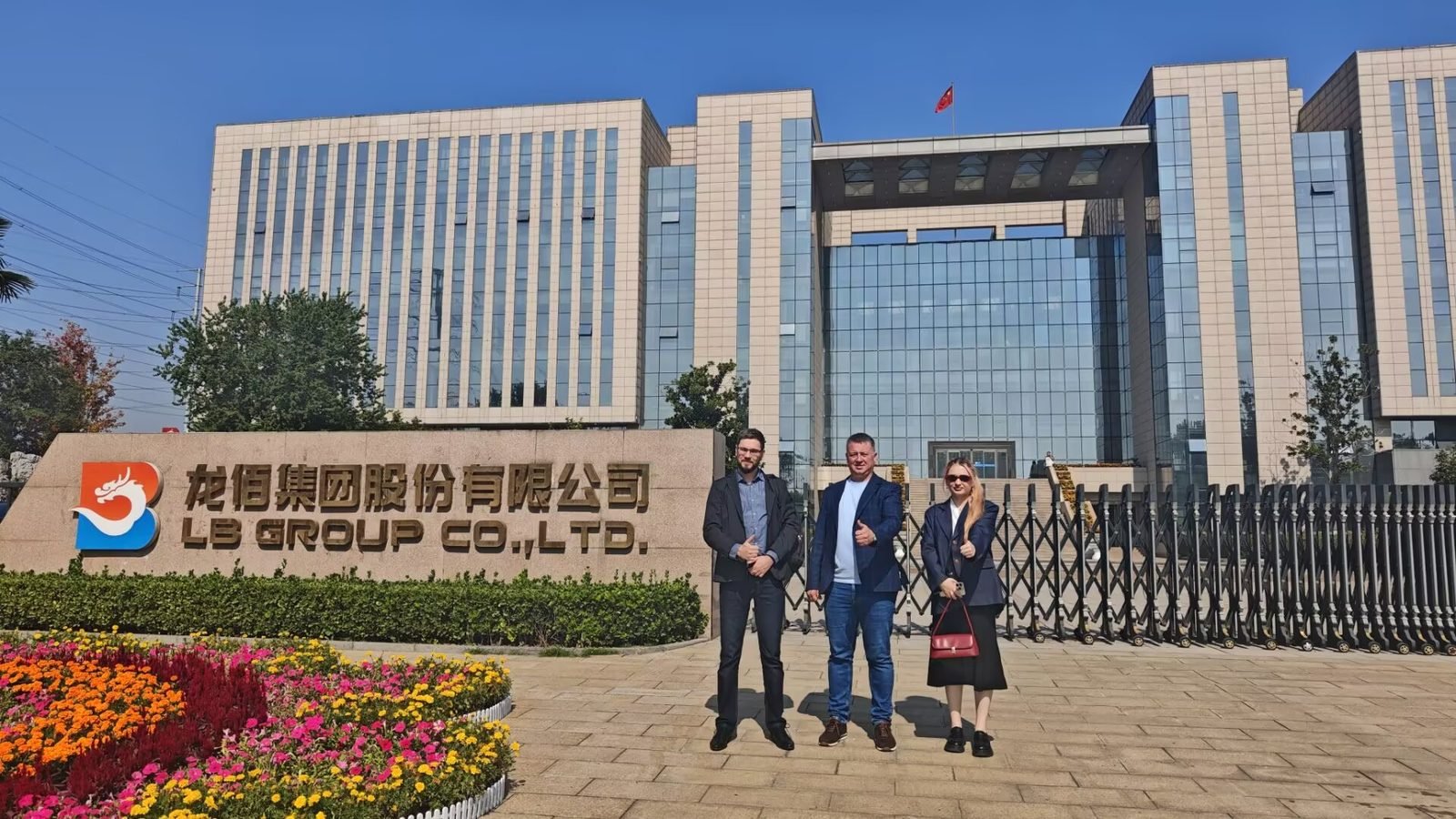
WPAChem × LB Group: Reaching Consensus on Building a Digital Chemical Trading Platform
Recently, WPAChem’s Russian team visited the headquarters of LB Group, a leading enterprise in the chemical new materials sector. The two sides held in-depth discussions on digital industry collaboration, market
Thermoplastic Elastomers (TPE): TPR, TPV, and TPU
Thermoplastic Elastomers (TPE): TPR, TPV, and TPU Thermoplastic Elastomers (TPE) are a versatile class of polymers that combine the processing advantages of plastics with the flexibility and resilience of rubber.
 English
 Japanese
 Korean
 Russian
 Spanish
 Chinese
 Thai
 Vietnamese
 Turkish