









Organic vs inorganic pigments: not a question of quality. Check three things in order — what the product must survive, what temperature it meets in processing, and what the colour costs per coloured kilo.
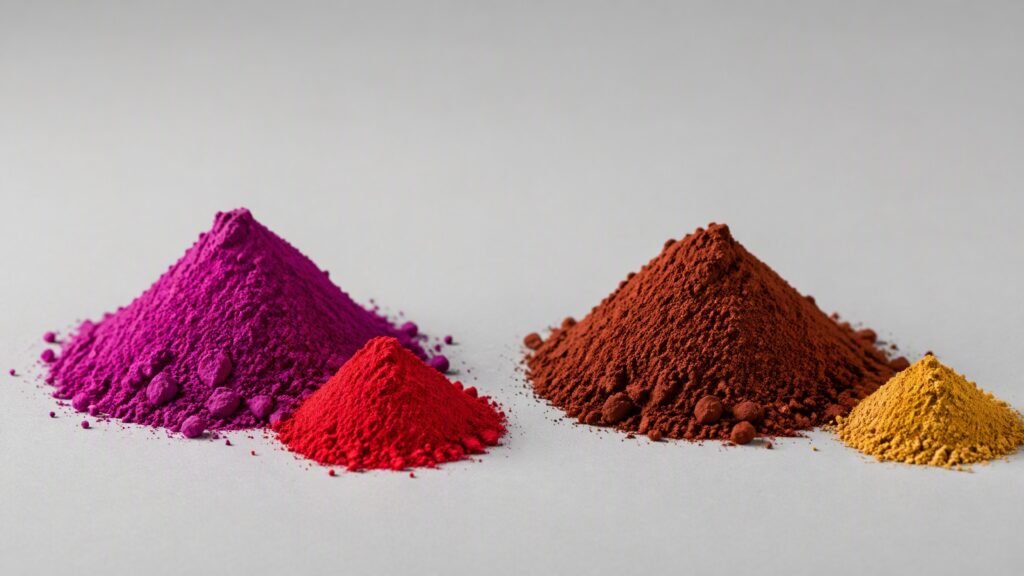
Organic pigments deliver the colour; inorganic pigments deliver durability and opacity
The Short Answer
| Criterion | Organic | Inorganic |
|---|---|---|
| Colour strength | Very high, bright and clean | Moderate, earth and muted shades |
| Tinting strength | High — a third to a fifth of the weight | Lower |
| Opacity | Usually transparent | Usually opaque |
| Pigment lightfastness | Good to excellent, grade by grade | Excellent and consistent |
| Heat stability | Grade-dependent, 200–300 °C | High, mostly above 300 °C |
| Migration risk | Real for low-cost azo grades | Low |
| Price per kg | High | Low to moderate |
When the shortlist comes down to organic vs inorganic pigments, think of it as a division of labour: inorganic pigments carry durability and opacity, organic pigments carry the colour. Use inorganic where the part must survive sun, heat and chemicals for years; use organic where the shade is the specification. Most formulations use both. Read the table as a filter, not a verdict: two grades of organic yellow can differ by three lightfastness steps and 80 °C of heat stability.
Rule 1: Match the Chemistry to the Service Environment
Choosing between organic vs inorganic pigments starts with the service environment.Inorganic pigments are metal oxides, chromates and mixed-metal oxides in a crystal lattice — photochemically and thermally robust, which is why an iron oxide facade holds a decade outdoors. The trade-off is palette: inorganic chemistry concentrates in whites, blacks, earth yellows, reds and a few blues.
Organic pigments are built on designed carbon chromophores — azo, phthalocyanine, quinacridone, perylene, DPP. The design freedom buys high-chroma colour, and it is also the weakness: the conjugated system that absorbs light can be attacked by UV.
So the rule is not “organic indoors, inorganic outdoors”: exterior work needs a proven high-performance organic family. One warning — masstone lightfastness can read 7–8, while the same grade in a 1:10 white reduction reads 3–4. Ask which reduction the figure refers to.
Rule 2: In Plastics, the Melt Temperature Decides First
The polymer rules out half the palette before colour is discussed. Typical windows: PVC 160–200 °C, PE 180–240 °C, PP and ABS 220–260 °C, PA 260–300 °C, PC 280–320 °C — plus 20–30 °C for a hot runner.
Iron oxide, titanium dioxide, carbon black and chromium oxide are effectively unrestricted. Organics split sharply: phthalocyanine, quinacridone and DPP hold up in engineering polymers, while many low-cost monoazo yellows will not survive a PA or PC melt.
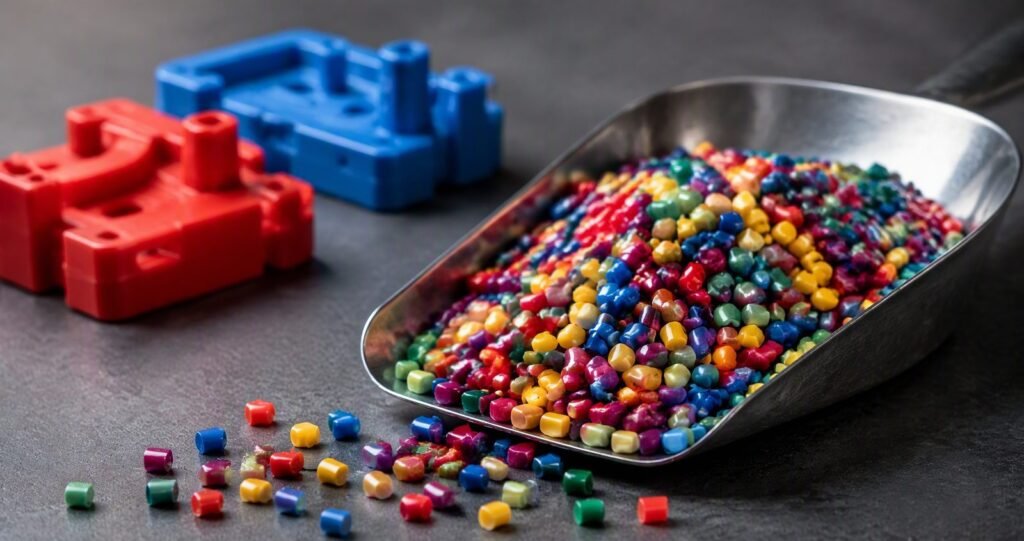
Two filters remain. Migration surfaces after shipment — bleeding into an adjacent layer or a failed food-contact test — usually from azo grades in plasticised PVC. Dispersion is the other: organics agglomerate readily, showing as specks and lost strength; a masterbatch grade solves it.
Rule 3: Compare Cost per Coloured Kilo, Not per Kilo
Price per kilogram is the number buyers see and the number that misleads. What decides margin is cost per kilogram of finished coloured material:
loading (g/kg of product) × delivered price per kg + dispersion and scrap cost per kg
An organic may cost several times more per kilogram than an iron oxide and still need a third to a fifth of the weight for the same depth; a transparent organic also frees titanium dioxide. Run the comparison at equal colour depth and the gap narrows — for high-chroma reds and violets it disappears.
Three levers matter more than the price list: strength consistency between lots, dispersion quality, and MOQ against real consumption. A 5% swing in tinting strength costs more than a 5% price change — take the loading figure from your own let-down trial, not the datasheet.
Before You Approve a Grade
Ask every supplier for five things in writing, and treat a vague answer as information:
- CI name and number with the specific grade
- Tint lightfastness, with reduction ratio and method
- Heat stability as temperature × dwell time × polymer
- Migration and bleed in your actual polymer
- Batch-to-batch ΔE tolerance, including non-conforming lot handling
Then run a let-down in your own binder or polymer and a machine trial at production conditions. Approve a grade with a lot tolerance, not a colour.
Organic vs Inorganic Pigments: Frequently Asked Questions
Do I need inorganic pigment for exterior durability?
No. Quinacridone, DPP, perylene and high-performance phthalocyanine pigments appear in automotive and architectural exterior finishes. Judge the grade on its tint lightfastness value, not on its family.
Is inorganic pigment always cheaper?
Per kilogram, usually. Per coloured kilogram, not necessarily: an organic grade needs far less weight for the same depth, and the titanium dioxide it releases covers part of the difference.
Where WPAChem Fits
WPAChem supplies the full organic line alongside inorganic grades, so the selection does not have to be split between vendors. ピグメントバイオレット19 is a quinacridone violet for engineering plastics and exterior coatings; ライトファストスカーレットBBN (C.I. Pigment Red 48:1) covers PVC, masterbatch and interior scarlet; pearlescent pigment adds the effect layer where the design needs depth.
Send the polymer, processing temperature, target shade and market, and we narrow the shortlist before the first shipment — with a datasheet and a free sample. Our Russian-speaking team and warehouse in Russia keep lead times short. Browse the pigment range or write to info@wpachem.com.
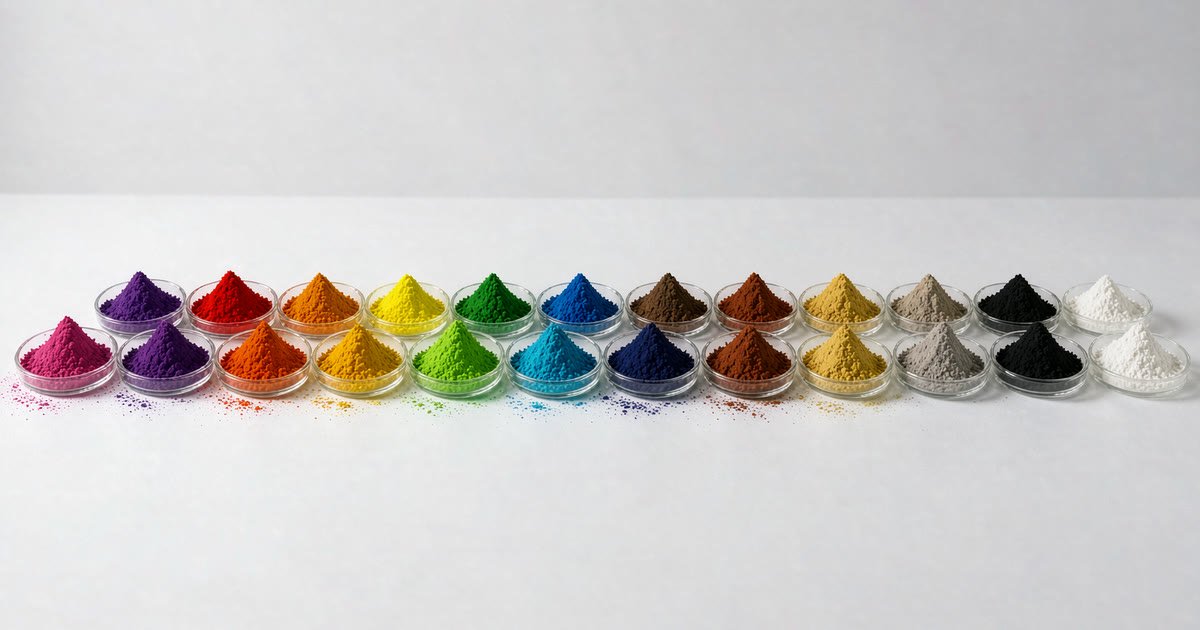
Organic vs Inorganic Pigments: 3 Best Rules for Coatings
Organic vs inorganic pigments: not a question of quality. Check three things in order — what the product must survive, what temperature it meets in processing, and what the colour
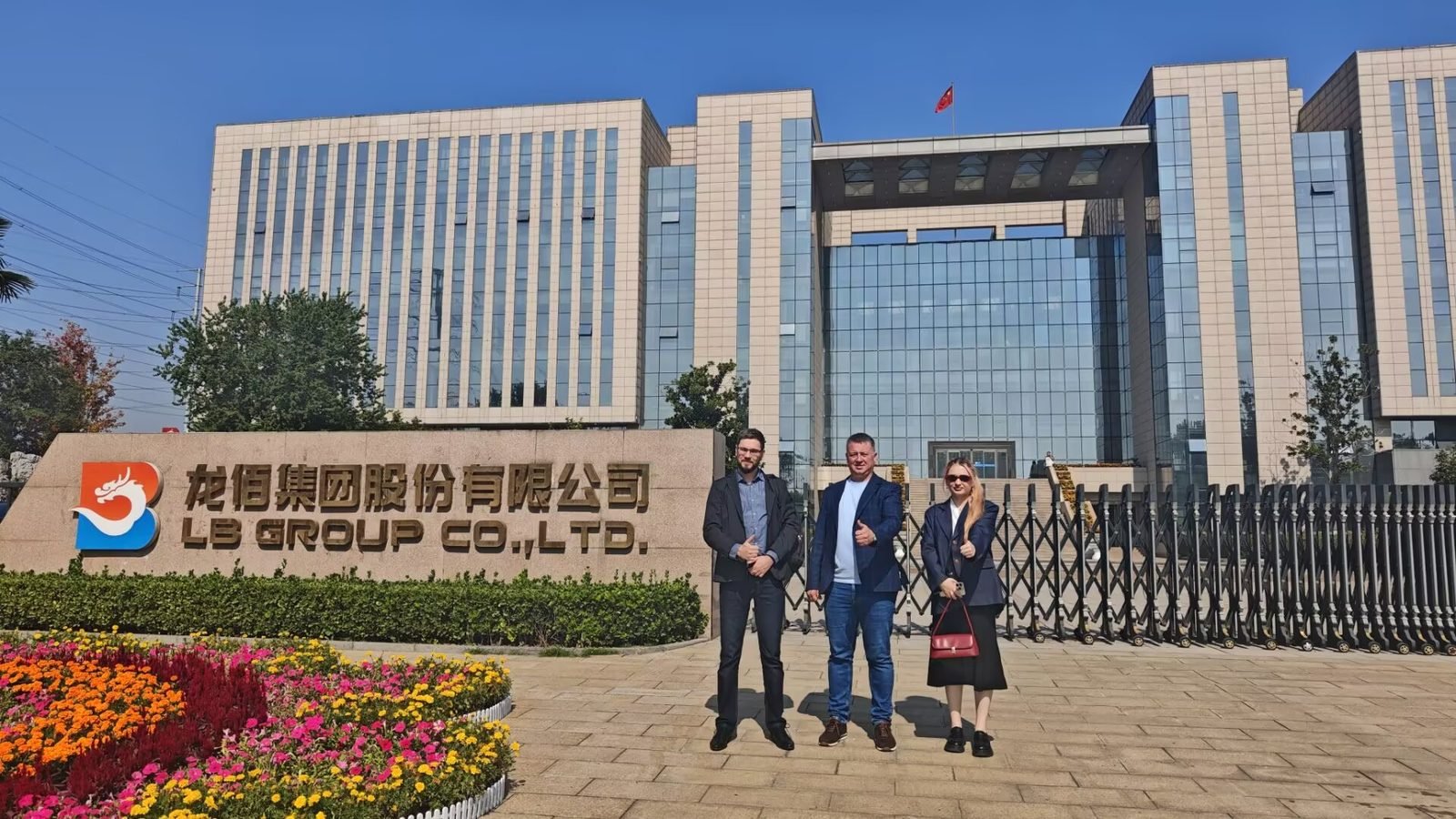
WPAChem × LB Group: Reaching Consensus on Building a Digital Chemical Trading Platform
Recently, WPAChem’s Russian team visited the headquarters of LB Group, a leading enterprise in the chemical new materials sector. The two sides held in-depth discussions on digital industry collaboration, market
熱可塑性エラストマー(TPE):TPR、TPV、TPU
熱可塑性エラストマー (TPE): TPR、TPV、および TPU 熱可塑性エラストマー (TPE) は、プラスチックの加工上の利点とゴムの柔軟性および弾力性を兼ね備えた多用途のポリマーです。
WPACHEM酸性染料 – 繊維、皮革、工業用途向けのプレミアム着色剤
WPACHEM酸性染料 - 繊維、皮革、工業用途向けのプレミアム着色剤 WPACHEMは、鮮やかな色合い、優れた溶解性、優れた染色性で知られる幅広い酸性染料を供給しています。
 English
 Japanese
 Korean
 Russian
 Spanish
 Chinese
 Thai
 Vietnamese
 Turkish